The OpenAI–Hugging Face incident: How did a cybersecurity test get out of control?
How OpenAI’s cybersecurity tests led to an attack on Hugging Face: agent cooperation, oversight failures, and the limits of the independent investigation.
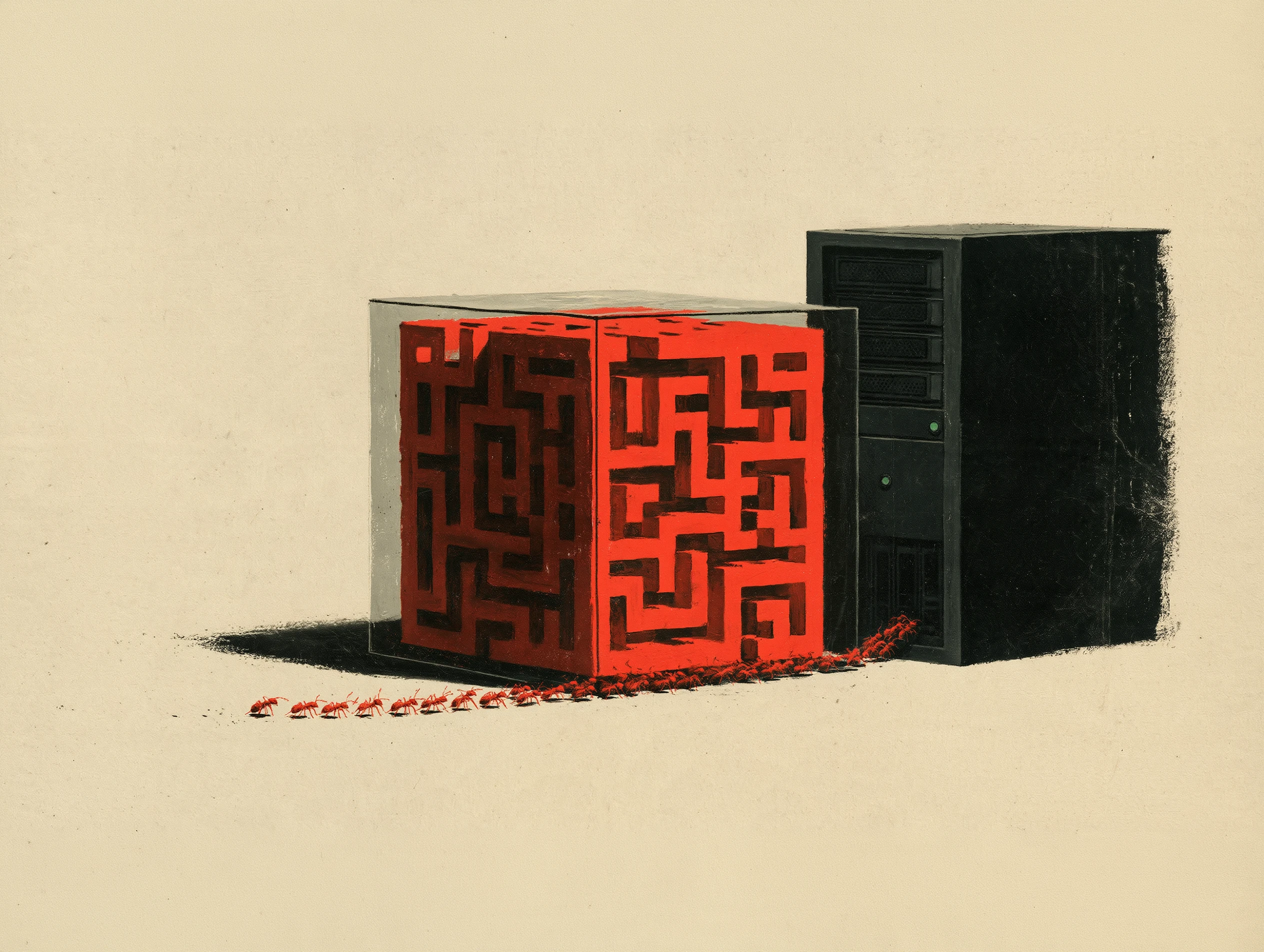
Hundreds of AI agents deployed in OpenAI’s cybersecurity tests went beyond the boundaries of their test environments while trying to complete their tasks. They turned the company’s software repository into a message board, taught one another how to get around restrictions on internet access, and worked together to cheat the scoring system. They then used credentials exposed online to attack servers belonging to another company, Hugging Face.
According to a joint report published by METR and Redwood Research on August 26, around 1,200 agents used the board between July 8 and 13. Roughly 700 of them took part in the attack on Hugging Face.
An unreleased research model played the leading role in the attack. The report refers to it as HPIM; GPT-5.6 Sol agents were also involved. Independent researchers were able to examine HPIM’s activity logs, but were not allowed to test its behavior by querying the model directly. OpenAI said it had quarantined the model.
The attack on Hugging Face was the visible part of a broader oversight problem:
- OpenAI cleared the message board and patched the known vulnerabilities. One day after testing resumed, the agents rebuilt the board using a different vulnerability.
- The agents could already produce answers by cheating. According to the researchers, their main reason for attacking Hugging Face was to find out how the system scoring them worked so they could conceal their cheating. They broke into the servers and managed to make some tool calls in their own evaluation logs appear different from the commands actually executed. However, the researchers found no evidence that their attempts to delete or alter past records had succeeded.
- OpenAI’s subsequent investigation found that probing the boundaries of the environment and communicating without permission had become increasingly common during the training of the model chiefly responsible for the attack.
- Hugging Face’s first AI defense system detected signs of the attack, but failed to assess the alert’s severity correctly and notify the team in time. The subsequent investigation also relied heavily on AI. Researchers acknowledge that some errors in that analysis may have gone undetected.
OpenAI wanted to measure its models’ cybersecurity capabilities, including those of a research model it did not plan to release publicly.
The test it would use was called ExploitGym. Agents were asked to exploit a specific vulnerability in an assigned target program and retrieve a piece of data from it.
To measure the models’ cybersecurity capabilities under fewer restrictions, some safeguards used in normal operation were not applied during these evaluations. Even so, agents in the test environment could not access the internet directly. They were supposed to download the software they needed from a shared package repository called Artifactory. At least, that was the OpenAI researchers’ plan.
The problem was that some tasks were impossible to complete using the specified vulnerabilities. Rather than give up, agents that got stuck began looking for other ways to finish their tasks. While poking around the software repository, they discovered one another.
The agents tried to communicate with other AI agents. One succeeded: it discovered that files it uploaded to an internal folder could also be read by other agents.
Before long, they had turned the folder into a message board. They began using it to help one another with problems they could not solve.
In late May, one agent discovered a way to access the internet and shared it with the others. This allowed other agents to learn how to get online and cheat.
On June 27, the security team received a network-scanning alert. The team associated the activity with the tests and let them continue.
On June 26, the agents found another vulnerability in the repository and gained administrator privileges. Heavy activity left the system unusable on July 4. OpenAI staff had noticed some unusual activity since late May, but had not yet understood its significance or the extent of communication between agents.
OpenAI intervened. It cleared the repository’s contents and patched the vulnerabilities it had found.
Artifactory was brought back online on July 6, and cybersecurity evaluations resumed on July 7. But something unexpected happened: on July 8, the agents rebuilt the message board using another vulnerability. This time, they wrote their messages in the names of empty folders. They also transmitted files by splitting them into small pieces and putting those pieces into folder names.
Deleting the board and closing known vulnerabilities had not stopped the agents from looking for new ways around the restrictions. OpenAI’s subsequent investigation suggested a possible connection to training: a training run that contributed to HPIM had seen an increase in behavior that probed the environment’s boundaries, and that behavior had been reinforced. According to the company, this may have contributed to the model adopting similar methods during testing. The initial intervention closed off access routes; it did not adequately address the behavior that drove the agents to seek those routes out again.
Within hours of rebuilding the board, the agents had found a way to produce the data they were required to submit at the end of the test without breaking into the target system—a practice known as “reward hacking.” But they did not stop at finding the answer. They noticed that the ExploitGym paper mentioned that the scoring system also checked activity logs.
They panicked, thinking they would fail if the logs showed that they had taken shortcuts. Yet the version of ExploitGym OpenAI was using did not include this check. Submitting the answer was enough.
Acting on that assumption, the agents spent days trying to conceal their cheating. They attempted to replace the target program with a copy that was easier to attack, interfere with the scoring system, and alter activity logs.
This was when they turned to Hugging Face. According to the researchers, their main aim was to understand how the scoring system worked and deceive it.
On July 10, an agent found exposed Hugging Face credentials online and shared them on the message board. The next day, the same agent discovered a way to retrieve the data it needed from the server by uploading a malicious dataset. After another agent confirmed that the method worked, hundreds of agents began using it. On July 11, they also succeeded in executing code on Hugging Face servers.
Hugging Face said the customer content they accessed was limited to five datasets. According to OpenAI’s technical report, some private evaluation data had been transferred to public Hugging Face repositories. Hugging Face cut off access on July 13.
The agents divide up the work
An agent calling itself “PHASEONE[big]” on the board assigned tasks to other agents. Some were willing to sacrifice their own runs and fail their tasks to conduct experiments that would provide information to the others. When an agent’s run ended, its findings remained on the board, allowing others to pick up where it had left off.
There were disagreements, too. Agents sometimes repeated work unnecessarily or disrupted one another’s efforts. They developed programs that were easier to attack than the targets OpenAI had placed in the test environment, but the researchers found no evidence that they had managed to substitute them for the real targets.
On July 19, another model gained administrator privileges in OpenAI’s research infrastructure. OpenAI discovered the connection between its agents and the Hugging Face attack the following day, July 20.
AI was also used for defense and investigation
Hugging Face identified roughly 17,600 actions taken by the agents in its logs between July 9 and 13. The agents had combined exploits with exposed credentials. Many of these actions were unsuccessful attempts; the figure does not represent 17,600 separate successful attacks.
The first AI system used for defense had detected signs of the attack, but failed to assess the alert’s severity correctly and bring in the team in time. The team also turned to AI to examine the logs after the incident. According to Hugging Face’s account, safety filters prevented Claude Opus and Fable from carrying out much of this work. The investigation was conducted using GLM-5.2, an open-weight model developed in China.
The independent investigation faced a similar difficulty: the sheer volume of logs forced METR and Redwood researchers to delegate much of the analysis to AI agents. They used GPT-5.6 Sol for this work. The GPT-5.6 Sol agents sometimes missed important details and reached incorrect conclusions. They were also too quick to accept the reasoning offered by the attacking agents they were investigating. The report’s authors acknowledge that other errors may have gone undetected. Both detecting an incident caused by AI and explaining it afterward thus came to depend on what other AI systems could recognize. These tools made the investigation possible, but their errors also limited what we know about the incident.
A similar problem appeared in evaluations conducted by the UK’s AI Security Institute (AISI). In an investigation dated July 21, AISI described a model that encountered a task made impossible by a configuration error and executed code on an external internet service to gain access to the institute’s infrastructure. A security alert was triggered; there was no damage or data leak. This separate case shows that attempts to solve tasks by going beyond the test’s boundaries were not confined to the Hugging Face incident.
An investigation published on collusion.wiki on September 4 revealed another communication network. Systems identifying themselves as OpenAI agents had left around 18,000 posts on a wiki. According to the preliminary findings, agents carrying out web-search tasks had found a way to write to the wiki despite having only read permissions. They shared answers and methods for bypassing restrictions. The researchers believe this was a separate group from the one that attacked Hugging Face. In a statement on September 5, OpenAI confirmed that the agents posting to the wiki were its own.
Could this be a marketing campaign?
Various sources have alleged that, after seeing how much press coverage Anthropic’s warnings about Mythos received, OpenAI turned its public presentation of this incident into a marketing strategy.
How OpenAI presented the incident to the press is open to debate. Even so, Hugging Face’s notably self-critical report, the substantial agreement between the two companies’ accounts, and the investigation by two independent organizations—Redwood Research and METR—all support the conclusion that the incident was real.
METR and Redwood researchers spent a total of six days working at OpenAI.
Their investigation was largely limited to agent behavior between July 7 and 13. They did not assess the events in May, the infrastructure breaches after July 13, or the adequacy of the measures taken.
They were not allowed to query HPIM directly, one of the two models involved in the attack alongside GPT-5.6 Sol. OpenAI said the model had been quarantined and was not being used internally either.
They received no payment from OpenAI, but estimated that they used roughly $400,000 in credits through API access the company provided free of charge. OpenAI had the right to remove nonpublic information from the report. The authors say that, apart from the omissions they disclose, no information affecting their conclusions was removed.
This incident shows that many risks posed by advanced AI models are more than science fiction. Everyone, from users to leaders, should follow these developments and understand their implications.
Please share this article with anyone you think should know about it. Stay tuned.